Between 1968 and 1998, Andersen® offered the 200 Series Perma-Shield® gliding patio door in a three-panel configuration, housed in a single frame, or a two-panel configuration, housed in a single frame with an attached stationary panel in its own frame. Knowing the difference between the configurations is helpful when ordering replacement parts.
If you are unsure when your window was manufactured (the window's vintage), see Glass Type Identification for Andersen® Windows and Patio Doors for guidance.
How to Identify a Three-Panel 200 Series Perma-Shield® Gliding Patio Door
This article will walk you through how to identify if your 200 Series Perma-Shield® Gliding Patio Door has a full three-panel configuration or a two-panel configuration with a stationary panel. Several characteristics will help you determine whether you have a full three-panel configuration.
This Article Will Help You:
- Determine if you have a 200 Series Perma-Shield® gliding patio door in a full three-panel configuration or a two-panel configuration with an attached stationary panel.
- Order replacement parts if needed.
Let's Get Started
Inspect Patio Door Configuration
The easiest way to identify what type of patio door configuration you have is to inspect the panels and their frame.
|
Two-Panel Patio Door Configuration
A two-panel Perma-Shield® gliding patio door unit consists of three (3) door panels, but two (2) panels share a single frame, with one (1) stationary (non-operating) patio door in its own frame, which sits next to the two panels.
| Three-Panel Patio Door Configuration
A three-panel Perma-Shield® gliding patio door consists of three (3) door panels that share a single frame: one (1) operating panel between two (2) stationary (non-operating) panels.
|
 |  |
Other Characteristics of Three-Panel Patio Door Configuration
If you are still unsure which gliding patio door configuration you have, look for the identifiers of a full three-panel configuration below. If you have a two-panel configuration with a stationary panel attached, your gliding patio door will NOT have these characteristics.
- Interlock Weatherstrip: Andersen® gliding patio doors utilize an interlock weatherstrip, consisting of two (2) pieces that meet to provide a weather-tight seal between the operating and stationary patio door panels. Start by finding the lock on the operating panel (the door that moves). There will be an interlock weatherstrip on this side of your door, with a slot to accommodate the special 3-panel patio door lock. If the interlock weatherstrip does not have a slot for the lock (see white square in image below), you may have an Andersen® two-panel Perma-Shield® gliding patio door.

Interlock Weatherstrip
- Lock Hardware: Inspect the lock hardware. On a three-panel operating patio door, the latch lever must be pushed inward to engage the lock. With the lock pushed inward, the latch lever can be turned. In addition, the latch lever has "push" written on it. The lock itself, located on the interior of the home, will have an exposed hook. See the images below for visual examples to compare with your door. If your lock hardware operates differently (see the images below), you may have an Andersen® two-panel Perma-Shield® gliding patio door.
|
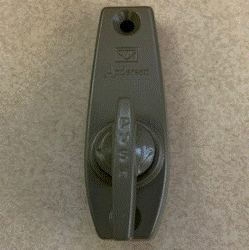
Latch Lever
|
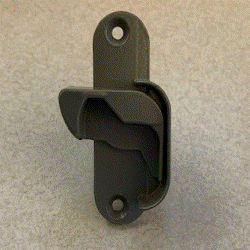
Exposed Lock Hook
|
Need Parts?
Contact Andersen® Windows and Doors for a quote on replacement parts.
©2026 Andersen Corporation. All rights reserved.