Andersen® windows and doors arrive with a protective plastic film applied to the interior and exterior glass surfaces. The protective film is intended to temporarily help protect the glass during construction and installation.
How to Remove the Protective Film from an Andersen® Window or Patio Door
It is recommended that the film be removed within the first six (6) months after the Andersen® window or patio door was manufactured.
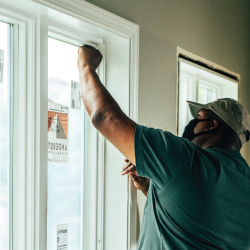
Removing Protective Film
This Article Will Help You:
- Remove the protective film on your window or door.
Let's Get Started
Important Warnings
- If a ladder or scaffolding is needed to reach and remove the protective film from the glass, ensure the ladder or scaffolding is secure, and that care is taken during removal. Failure to do so may result in injury.
- The protective film may pose a suffocation hazard to children. Dispose of the film properly immediately after removal, and keep it out of children's reach.
- Peeling off the protective film may create a static charge that could cause a shock or spark. Static charge and sparks can pass through the glass to the other side. Misting the glass with water may reduce static charge and sparks.
- Solvent, cleaner, and foam insulation must be dry, and all flammables must be safely stored before the protective film is removed.
Remove Protective Film
Note: The film is removed more easily at temperatures above 32 degrees Fahrenheit.
- From a corner of the window or patio door, slowly peel back the protective film with a fingernail or a clean plastic scraper as needed.
- Important: Never use sharp tools, such as razor blades, on the glass surface.
- After removing the film, clean the glass.
©2026 Andersen Corporation. All rights reserved.